
Tesla window tint stands out as one of the best ways to make your ride more comfortable, private, and thermally efficient. Because of their large glass surfaces and lighter color choices, the sun enters a Tesla more readily than many other vehicles, creating a hot, bright cabin and harsh glare during day-driving. A well-installed Tesla tint helps prevent these problems and even gives your Tesla a more polished look from the outside.
Achieving the best outcome with Tesla window tint isn’t simply about choosing the darkest tint color possible; it also includes considering the tint type, legal restrictions, quality of installer, and even the geometry of the windows themselves.
Why Consider a Tesla Window Tint Job?
The value of Tesla window tint lies in how it contributes to a more pleasant driving experience. Yes, while larger windows are a cool feature, they also allow more heat and UV exposure inside the cabin.
Here are some of the more common reasons people elect to get Tesla window tinting performed on their vehicle:
- Lowered cabin temperature on sunny days
- Reduced visibility interference from direct sunlight
- More visibility privacy for the occupants and contents
- UV protection for interior surfaces such as the seats, dashboard, and touchscreen
- More uniform exterior look
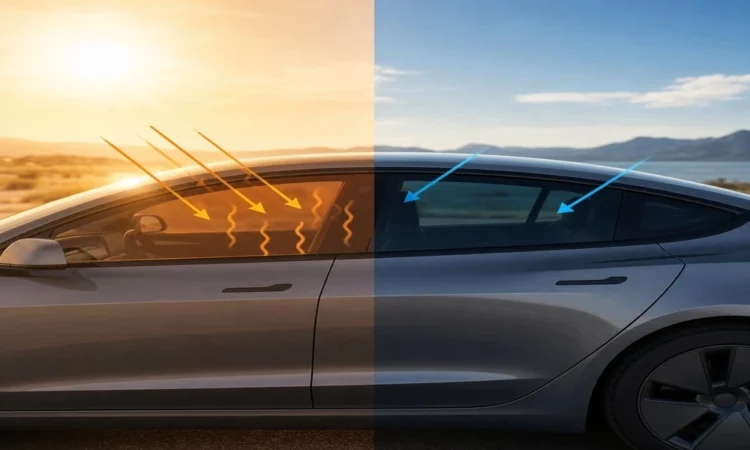
Many Tesla owners tint their cars primarily for its heat-reducing qualities. Even if you use the air conditioning when driving, sunlight streaming through the large windows on its own will make the car warmer than you might expect. With higher quality window tints from Vinyl Mafia, you’ll feel less heat buildup and have a more pleasant driving experience whether you’re on a quick daily run or an extended road trip.
Tesla window tint reducing heat and glare inside cabin
What Makes Tesla Tint Installation Different?
Tint can be more complex to get just right on a Tesla than on many other vehicles on the road, which can depend on your trim level and model year. Some of the newer Teslas boast much bigger rear windows, curved glass, and less wiggle room around the interior trim for the installer, making the job even more challenging. Additionally, the interiors of Teslas are famously simple and sleek, with light interiors, which means any mistakes will stand out in relief since there’s no patterned upholstery or dark interior to draw your eye away from them. If there’s any dust under your film, or if the edges look a little uneven, or if there are air bubbles or you don’t get a nice seal at the very outside of your film, you’ll notice it.
Typically, people start with the side windows, since that’s the first place they’re going to feel the benefits of the film in terms of glare and privacy. Rear windows can also be tinted as they often take up quite a lot of room to be cut and placed properly. Some customers prefer a lighter film for the windshield to help reduce heat inside the car and still allow for a clear view of the road. You should double-check the window tint laws in your state (there is a helpful breakdown at drivinglaws.aaa.com/tag) to determine if a windshield film is legal and what kind of visibility it may need to maintain.
What Film is Best for Tesla Window Tinting?
The type of window film can make a difference in how the end results turn out. Having darker window tint does not guarantee a better outcome, particularly if your primary reason for getting your windows tinted is to feel comfortable in the cabin. There are some newer technologies in the film world that can help block out a lot of heat while still allowing visibility.
Dyed Window Tint Film
Dyed film is the most basic tier of window film that you can get. It will provide you with better style and will lower some of the glare. However, this will provide less heat rejection and can fade quicker than other premium films.
Carbon Window Tint Film
Carbon film is more durable and can provide a more premium finish compared to dyed window films. It will also provide you with a better heat rejection as compared to dyed film and will retain its color longer.
Ceramic Window Tint Film
Ceramic film is one of the most popular options for a Tesla. It does not require you to tint dark to get the benefit of heat rejection and blocking out UV rays (related site). This is an excellent option for owners looking for a refined aesthetic while also getting the comfort and visibility they need. “Because large glass areas mean that tint quality becomes particularly critical, as performance and flaws alike are more readily visible to the observer,” says Daniel Reyes, automotive film installation specialist. “With premium film, you can increase comfort without compromising your vehicle’s sleek aesthetic.”
What to Expect for a Tesla Tint Job
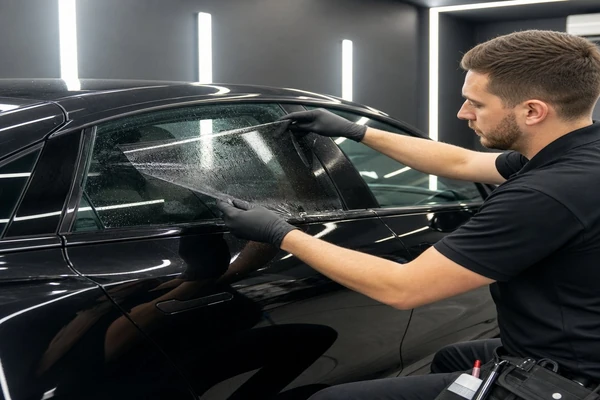
Technician applying window tint film to Tesla side glass
5 Common Tesla Window Tinting Mistakes to Avoid
- Picking a tint film because it is dark.
- Picking a tint film without considering your state’s window tint shade laws.
- Using a low-end automotive window tint product on large glass surfaces.
- Lowering your windows immediately after scheduling your Tesla tint appointment.
- Going with a tint technician who has little to no experience tinting vehicles with a glass configuration that’s similar to yours.
A Smarter Way To Drive a Tesla
In short, window tinting your Tesla is a worthwhile add-on when it comes to comfort, protection, and style. Although the darkest tint available may not be the ideal choice for your Tesla, the correct tint can be customized to fit what you want it to be able to handle in terms of climate control, usability, sight lines, and the legal limits in your area. With the proper automotive window tint film and an experienced installation, you’ll be able to keep your Tesla cooler and more enjoyable.