

The rear wall of a pallet bay can give a clean distance reading even when a pallet is parked in front of it. The laser may be looking through the gap between two boards. That is a good reason to name the signal for what it proves. In a parts warehouse, the useful signal might be a carrier at its designated parking position. A beam aimed at one spot cannot establish whether the whole bay is empty.
Pick a face every carrier presents
For a fixed pallet design, a broad, solid face on the carrier gives the sensor a more repeatable target than the cartons above it. Draw where the beam lands with the pallet centered, then move the pallet to the allowed left and right positions. A corner, fork pocket or opening in the frame can shift the return to the wall. Include the actual floor, rear wall and neighboring carriers when you choose the mounting point.
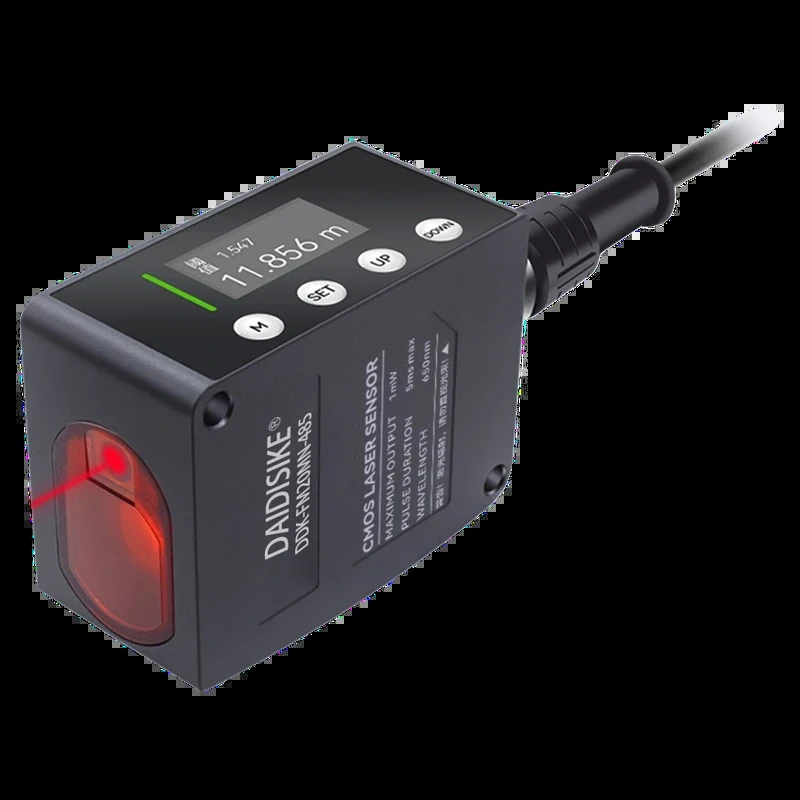
DAIDISIKE DDK-F laser distance sensor with display and cabled connection
The DDK-F laser distance sensor is one example of a single point distance device. Its display lets a technician see which surface the beam is reading during setup. The model needs a measuring interval that covers the intended carrier face and any empty bay reference the application relies on. If the background falls outside the usable interval, determine how the sensor and controller report that condition.
Give the receiving system three states
Define a valid carrier band, a separately established empty reference and an unknown state. A stable reading from the carrier face can support a parked indication. A reading consistent with a tested empty bay can support an empty indication when the geometry makes those states distinguishable. Keep missing returns and unexpected distances separate. A failed or obscured reading should prompt another check before the warehouse system assigns that position.
Use the DDK-F English datasheet when selecting the range and signal interface. A threshold signal can be enough for a validated carrier check. A controller that needs to tell the carrier band from the background band needs the distance value or a separate means to distinguish the states. Check the signal behavior for the specific configuration before writing the control rule.
Test the empty bay as hard as the full one
Test parked, shifted and partially inserted carriers, then repeat with a clear bay and an occupied neighboring bay. Record both the physical condition and the reading. If the empty and occupied results overlap, move the measuring point or add a second observation before using the signal to assign a pallet slot. Keep this process check separate from personnel protection.
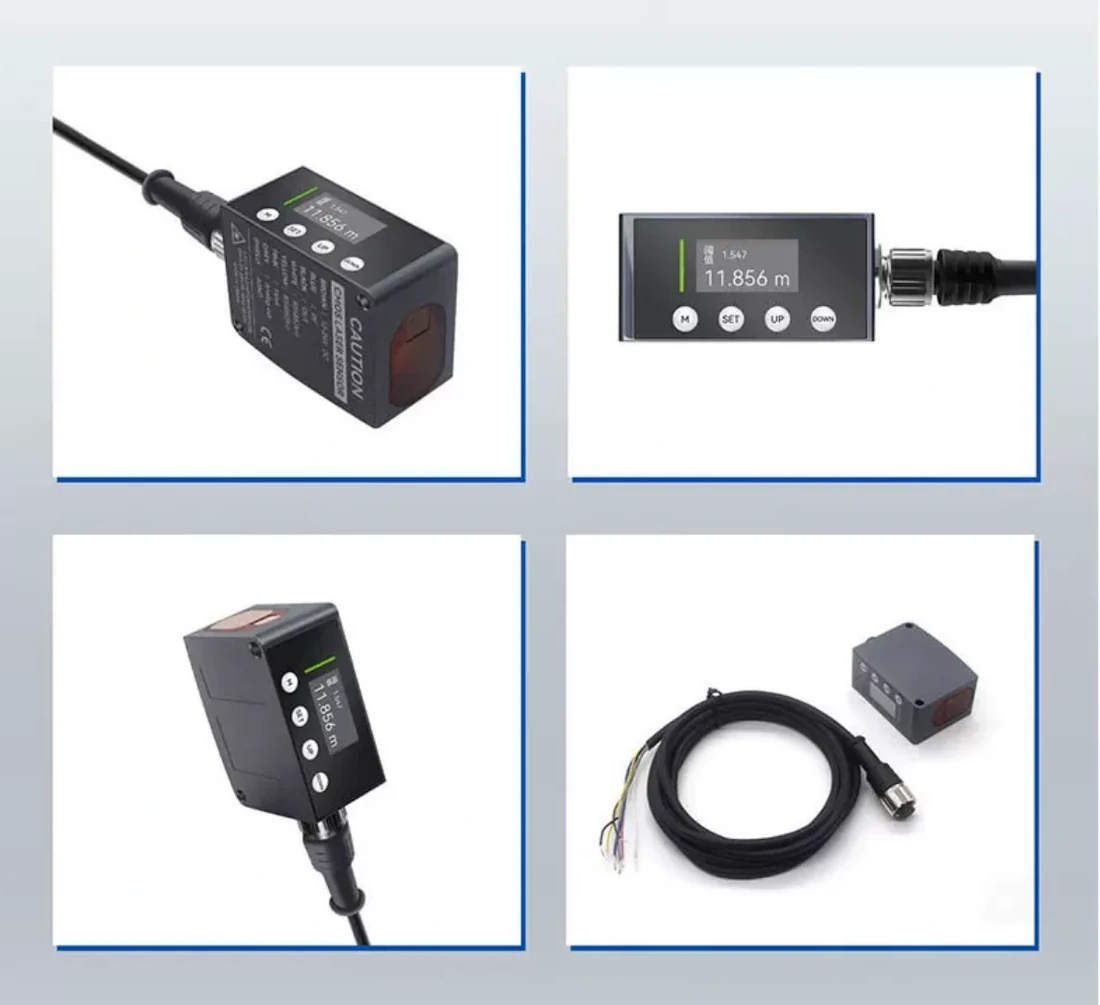
DDK-F sensor housing display and connection views